Public Finance
About Periodic Labour Force Survey (PLFS)
WHAT?
Periodic Labour Force Survey (PLFS) is an important survey conducted by the National Statistical Office (NSO) of India. It provides crucial data on employment and unemployment in the country, offering insights into the labor market dynamics. It was launched in April 2017.
The survey is conducted annually from July to June where as the since 2025, monthly surveys are also conducted. The survey compiles data from nearly 45,000 households comprising of around 1.7 lakh individuals from urban areas.
LFPR Provides regular estimates of:
- Labour force participation rate (LFPR) – % of working-age population in the labour force.
- Worker population ratio (WPR) – % of employed persons in the population.
- Unemployment rate (UR) – % of labour force that is unemployed.
FEATURES OF THE PLFS
- The primary objective of PLFS is to collect comprehensive and reliable data on various aspects of the labor force in India. This includes information on employment, unemployment, and other related indicators.
- PLFS covers both rural and urban areas and provides a breakdown of labor force statistics by various demographic and socio-economic characteristics.
- It collects information on employment status, industry-wise employment, educational attainment, and various other factors influencing labor force participation.
- The survey provides data on different metrics, such as the proportion of people demanding work, the proportion of people who failed to get a job, gender differences in employment and wages, sectoral distribution of workers, and the type of work people are engaged in, including casual labor, self-employment, and regular salaried jobs.
- The survey also estimates employment and unemployment indicators in both 'Usual Status' and Current Weekly Status. Additionally, the PLFS reports provide information on monthly earnings in different types of jobs, allowing for an assessment of income levels across various categories.
- The survey uses a sample-based methodology to gather data. A representative sample of households is selected, and information is collected from individuals within those households.
- Unemployment Rate: One of the key indicators derived from the PLFS is the unemployment rate, which indicates the percentage of the labor force that is unemployed and actively seeking employment.
- PLFS also provides insights into the informal sector, including self-employed individuals and those working in small enterprises, contributing to a more comprehensive understanding of the diverse nature of employment in India
- The survey findings have significant policy implications, as they inform policymakers about the effectiveness of existing employment and labor market policies. It aids in the formulation of strategies to address unemployment and underemployment challenges.
- The PLFS dashboard provides access to the survey data, and the survey is considered a primary source for monitoring global commitments on the world of work, including under Goal 8 (Decent Work and Economic Growth) and Goal 5 (Gender Equality) of the 2030 Agenda for Sustainable Development.
About author

Zinkpot — We Inform, You Perform.
Ask Anything, Know Better
अपना प्रश्न पूछें
-
What Is the Fiscal Multiplier?
October 11 What is it? The fiscal multiplier is a simple idea in economics that shows how government spending or tax changes can boost the whole economy. Imagine the government spends extra money on something like building roads or giving tax cuts. This extra money doesn't just stop there—it flows through the economy, creating more jobs, more spending, and higher overall income. The fiscal multiplier measures how much bigger the final impact is compared to the original amount spent or cut. In easy terms, if the multiplier is 2,...
-
What are Automatic Stabilizers?
October 06 DEFINITION Automatic stabilizers are built-in features of a government's fiscal policy that help moderate economic cycles without requiring new legislation or deliberate intervention. During the recession, they work by automatically increasing government spending or decreasing tax revenues to stimulate activity and take the opposite action during booms to cool things down. This helps smooth out fluctuations in GDP, employment, and inflation, making the economy more stable overall. The concept originates from Keynesian...
-
What is Income distance in Finance commission?
September 22 CONTEXT In the context of India's Finance Commission—a constitutional body tasked every five years with recommending how to divide tax revenues between the Centre and the states—income distance serves as a measure of economic inequality among states. As India's 16th Finance Commission gears up to redefine how central taxes are shared among states, one term keeps popping up in policy debates: "income distance." This seemingly straightforward concept is at the heart of ensuring equitable resource...
-
What is monetization and National Monetization Pipeline (NMP)?
September 15 Meaning of Monetization Turning something into money or turning non-revenue assets (e.g., free services) into profitable ones. For instance, in the music industry, artists monetize through streaming royalties or ad placements on platforms. Monetization refers to the process of converting something non-monetary—such as assets, data, services, or ideas—into money or revenue. In essence, it involves transforming resources that do not generate income into profit-generating opportunities. This can occur in...
-
What are State Development Loans (SDL)?
September 09 WHAT? State Development Loans (SDLs) are bonds issued by state governments in India to raise funds for their developmental needs. These are long-term borrowings intended to finance infrastructure, welfare schemes, and cover fiscal deficits. Since state revenue is often insufficient to meet expenditure demands, SDLs help bridge the funding gap in a structured and regulated manner. Although the SDLs are issued by state governments, the process is managed by the Reserve Bank of India (RBI), which conducts auctions on their behalf. These...
-
What is Fiscal health Index (FHI)?
August 28 WHAT? The Fiscal Health Index (FHI) is a composite measure developed by NITI Aayog, India's policy think tank, to evaluate the fiscal performance of major Indian states. It assesses aspects such as expenditure quality, revenue generation, fiscal discipline, debt management, and long-term debt sustainability, using data primarily from the Comptroller and Auditor General (CAG) report. The index aims to highlight strengths and weaknesses in state finances, guide policy reforms, promote best practices, and ensure...
-
AI to shrink white-collar workforce in the years ahead, Amazon CEO warns
June 18 SUMMARY On June 18, 2025, the Business Standard reported that Amazon CEO Andy Jassy warned employees that the integration of artificial intelligence (AI), particularly generative AI, will lead to a reduction in the company’s corporate workforce over the next few years. Amazon is investing heavily in AI, with ~$75 billion in capital expenditure in 2024 (predominantly for AI) and $10-20 billion in data centers to support AI growth. In an internal memo, Jassy emphasized AI’s transformative potential, describing...
-

In which Banks the government is selling it's stake? Why? How would it sell?
June 17 WHAT? The Indian government is accelerating its disinvestment drive by planning to sell up to 20% stake in five public sector banks (PSBs) within the next six months, utilizing Qualified Institutional Placement (QIP) and Offer for Sale (OFS) routes. This move aims to raise capital, improve bank governance, and ensure compliance with the Securities and Exchange Board of India’s (SEBI) minimum public shareholding (MPS) norm of 25%. The initiative is part of a broader strategy to strengthen the financial health of...
-
What is Non-Accelerating Inflation Rate of Unemployment (NAIRU)? All about it
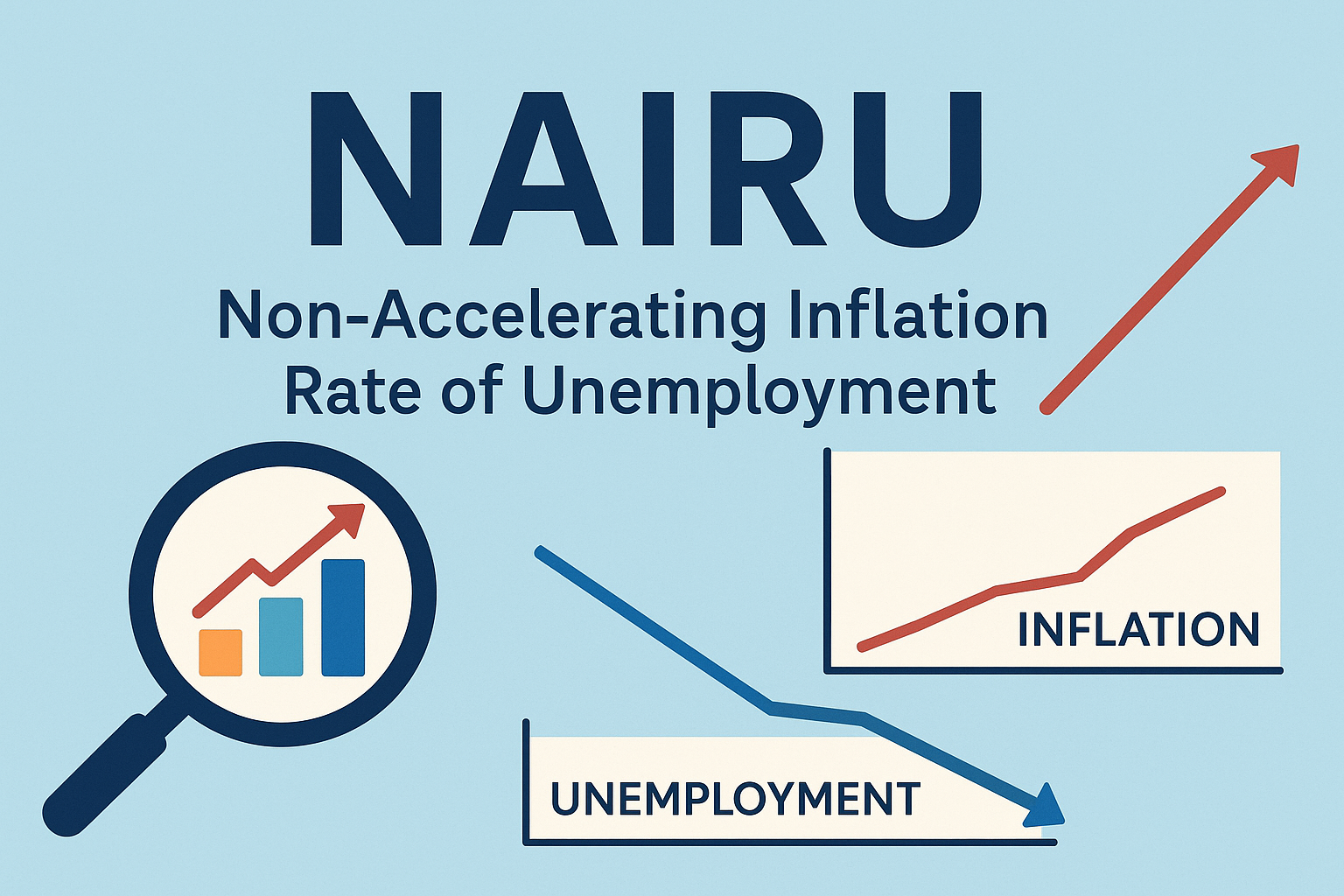
June 14 What is NAIRU? NAIRU, or the Non-Accelerating Inflation Rate of Unemployment, is an economic concept that represents the specific unemployment rate at which inflation remains stable, neither accelerating nor decelerating. It is a theoretical benchmark where the labor market is in equilibrium, meaning there is neither upward pressure on wages (which fuels inflation) nor downward pressure (which could lead to deflation). NAIRU is closely tied to the idea of the "natural rate of unemployment," but it...
-
Detailed provisions of Union Budget 2025-26 (PART2)
May 16 Investing in the Economy Public Private Partnership in Infrastructure : Infrastructure-related ministries to come up with a 3-year pipeline of projects in PPP mode, States also encouraged. Support to States for Infrastructure : An outlay of ₹1.5 lakh crore proposed for the 50-year interest free loans to states for capital expenditure and incentives for reforms. Asset Monetization Plan 2025-30 : Second Plan for 2025-30 to plough back capital of ₹ 10 lakh crore in new projects announced. Jal Jeevan Mission : Mission to...
Comments
Write Comment