International
All about the One Sun One World One Grid (OSOWOG)
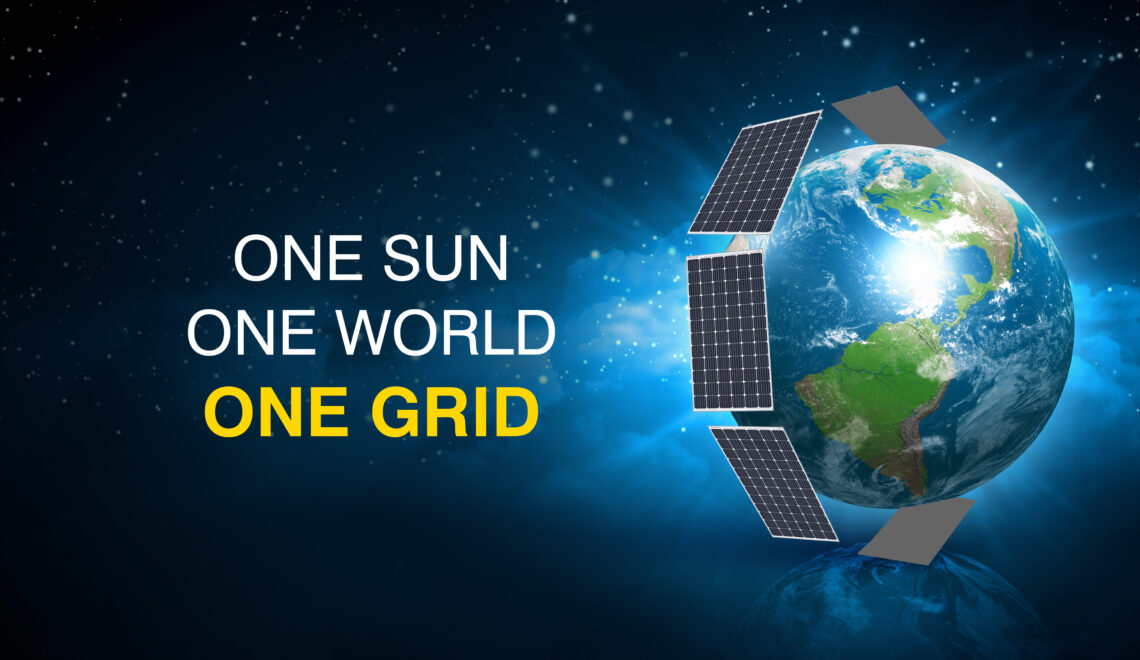
The One Sun One World One Grid (OSOWOG) is a transnational electricity grid supplying power all over the world. The idea was first proposed by Prime Minister Narendra Modi’s during the first assembly of the International Solar Alliance (ISA) in 2018. At the COP-26 climate summit in Glasgow in the year 2021, India launched ‘One Sun One World One Grid’ (OSOWOG).
The vision behind the OSOWOG initiative is the mantra that “the sun never sets”. The idea is to harness solar energy from different parts of the world, where the sun is shining at any given moment, and efficiently transmit that power to areas where it is needed.
By creating a connected global grid, regions that experience daylight can contribute excess solar power to other regions that may be in darkness, balancing energy production and consumption on a global scale.
During COP26 in November 2021, the Green Grids Initiative (GGI) was launched by the United Kingdom (UK) under India’s and the UK’s shared vision of 2030. The two countries aim to establish a collaborative framework for global cooperation in maximising the utilisation of renewable resources, ensuring that clean and efficient energy becomes a dependable alternative for meeting the energy needs of all nations by 2030.
GGI and the OSOWOG initiative were unveiled jointly by India and the UK as part of their bilateral collaboration in conjunction with the International Solar Alliance (ISA) and the World Bank Group (WB).
The OSOWOG, an international network of interconnected solar grids that will transfer solar power, seeks to connect 140 countries to continuous solar power and has been endorsed by 80 ISA Member Countries.
The Indian Space Research Organisation (ISRO) will develop a solar calculator application to inform countries about the solar potential of any place on the earth using satellite data.
The OSOWOG initiative will help in three energy transitions:
- Switch of energy production from fossil fuel to clean energy
- Switch of energy allocation from local balance to cross-border and global distribution
- Switch of energy consumption from coal, oil and gas to electric-centric consumption
The OSOWOG initiative is to be carried out in 3 phases:
In the first phase, the Indian grid would be connected to the grids of the Middle East, South Asia and South-East Asia to develop a common grid. This grid would then be used to share solar energy as needed, in addition to other renewable energy sources.
The second phase would connect the functional first phase to the pool of renewable resources in Africa.
The third phase would look at achieving true global interconnection with the aim of 2,600 GW of interconnection by 2050. The goal is to integrate as many countries as possible to create a single power grid of renewable energy. This can then be accessed by all countries.
ISA also aims to mobilise $1 trillion of funding by 2030 to assist developing countries in expanding their solar power grids to meet their energy needs.
Why do we need the OSOWOG?
Apart from addressing environmental concerns, India also seeks to have a geopolitical edge over China. Experts are of the opinion that OSOWOG is the answer to China’s One Belt One Road initiative where China is expanding it’s presence by funding infrastructure across the world.
Other potential benefits also mean improving the quality of life. The potential benefits include widespread scale-up in energy access, abatement in carbon emissions, lower costs of living and improved livelihoods.
Annually, India imports about $250 billion worth of fuels. This includes oil, diesel, LNG, fossil fuels, coal etc. If OSOWOG can be implemented, then India has alternative means to meet its energy requirements through sustainable energy that may reduce imported inflation pressures.
However there are possible challenges
- Building consensus among 140 nations and addressing geopolitical challenges, logistical issues related to land availability, potential problems arising from weather changes, wire breakage etc., makes the realisation of this ambitious project all the more difficult.
- It is challenging to secure affordable long-term finance crucial for projects in different regions and to attract private sector investments.
- The bigger the electricity grid the more vulnerable it is to accidents, natural disasters, cyber-attacks etc that can disrupt the electricity supply.
- Most of the equipment for solar equipment like cells, panels etc comes from China. This can be a hurdle as China will be least inclined in supporting a rival project like the One Sun One World One Grid
About author

Zinkpot — We Inform, You Perform.
Ask Anything, Know Better
अपना प्रश्न पूछें
Comments
Write Comment