Equity Market
All about Oswal Pumps IPO
ABOUT COMPANY
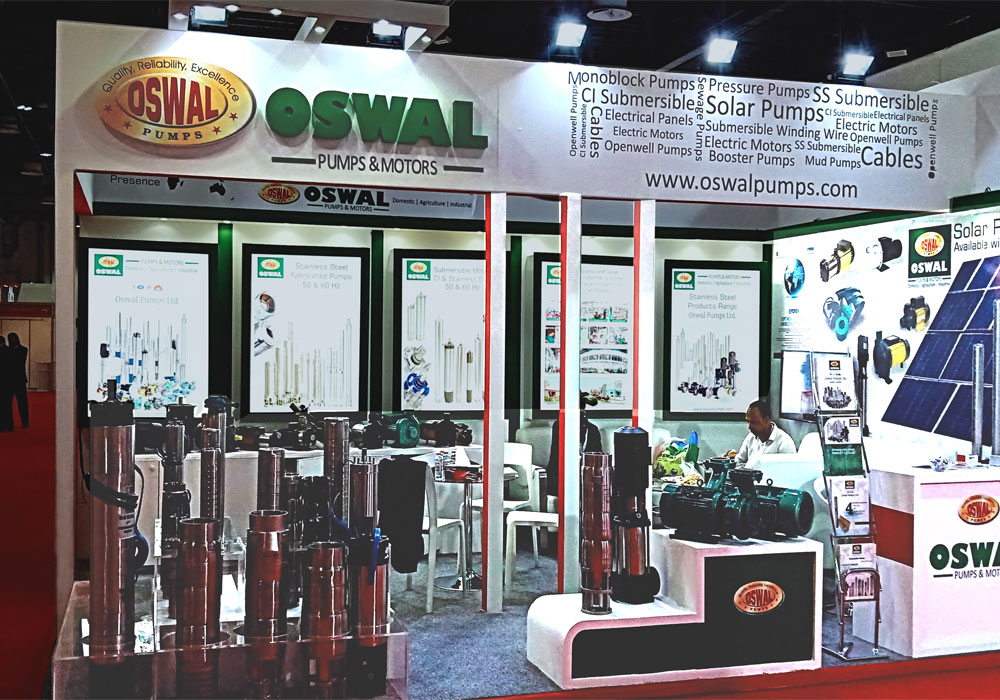
Oswal Pumps Limited, based in Karnal, Haryana, is a leading Indian manufacturer of pumps and motors, specializing in solar-powered and grid-connected solutions. Founded in 2003, the company has carved a niche in the renewable energy and agricultural sectors under the ‘Oswal’ brand.
Business Overview
- Products: Solar pumps, submersible pumps, monoblock pumps, electric motors, and solar modules. They cater to agricultural, residential, commercial, and industrial needs.
- Manufacturing: Operates a facility in Karnal with an annual capacity of 300,000 pumps and 100,000 motors. A new facility is planned via its subsidiary, Oswal Solar.
- Market Reach: Exports to 17 countries and has a domestic network of 925 distributors as of December 2024.
- Government Schemes: A key player in the PM Kusum Scheme, having installed 38,132 solar pumping systems by December 2024, supporting India’s renewable energy goals.Oswal Pumps Limited, a Haryana-based manufacturer of solar-powered and grid-connected pumps, is launching its initial public offering (IPO) to raise funds for expansion.
IPO Details
- Issue Size: ₹1,387.34 crore, comprising a fresh issue of ₹890 crore and an offer for sale (OFS) of 81 lakh shares (₹497.34 crore) by promoter Vivek Gupta.
- Price Band: ₹584 to ₹614 per share.
- Lot Size: Minimum 24 shares (₹14,736 for retail investors at the upper band).
- Investor Quotas: Retail 35%, QIB 50%, HNI 15%.
- Market Cap: ₹6,998.21 crore at the upper price band.
- Dates:
- Opens: June 13, 2025,
- Closes: June 17, 2025 and
- Allotment: June 18, 2025
- Listing: June 20, 2025, on BSE and NSE.
Financial Performance
- FY24: Revenue ₹758.57 crore (up 97% from ₹385.04 crore in FY23), PAT ₹97.67 crore (up 186% from ₹34.20 crore).
- 9M FY25 (ended December 2024): Revenue ₹1,065.67 crore, PAT ₹216.71 crore.
- Revenue growth CAGR of 45.07% from FY22 to FY24, driven by solar pump demand.
IPO Objectives
- Proceeds from the fresh issue will be used for:
- Capital expenditure: ₹89.86 crore.
- Investment in subsidiary Oswal Solar for a new manufacturing facility in Karnal: ₹273 crore.
- Debt repayment: ₹280 crore for the company, ₹31 crore for Oswal Solar.
- General corporate purposes.
Strengths
- Strong growth in the solar pump sector, supported by government initiatives like PM Kusum.
- Robust financials with high revenue and profit growth.
- Experienced management and a wide distribution network.
Risks
Heavy reliance on government tenders under PM Kusum Scheme (85.72% of FY24 revenue); any policy change could impact operations.
Concentration risk: Top 10 customers account for 79.5% of FY24 revenue, and Haryana is a key market.
Competitive market with peers like Kirloskar Brothers and Shakti Pumps.
About author

Zinkpot — We Inform, You Perform.
Ask Anything, Know Better
अपना प्रश्न पूछें
-
From Zomato to Lenskart: 25 tech startup IPOs, 8 losers, 4 multibaggers, and one unending argument
November 11 The Economic Times: Since 2021, India has seen a wave of startup IPOs, with at least 25 new-age tech companies entering the stock market. Their performance has been mixed but overall rewarding, delivering an average return of 42% to investors. Among them, 4 companies turned into multibaggers, giving huge returns, while 8 ended up in losses, showing the unpredictable nature of startup listings. The newest entrant, Lenskart, entered the market with massive hype on social media, but despite the buzz, its debut on Monday ended flat, disappointing...
-
Lenskart IPO: From Mega Hype to Flat Listing
November 10 Overview Lenskart, a popular Indian company that sells eyeglasses, sunglasses, and contact lenses, was all set for a big entry into the stock market on Monday, November 10, 2025. But just before the shares started trading, the excitement died down. The Grey Market Premium (GMP), which shows how much extra people are willing to pay for shares before they officially list, dropped to zero. This wiped out all the buzz that had built up. Investors who hoped for quick profits are now expecting a flat or even disappointing...
-
Groww IPO 2025: Key Dates, Details, Subscription Status, and Analyst Views
November 05 Overview Groww is a popular online platform in India where people can invest in stocks, mutual funds, and more. It's easy to use and has millions of users. Now, its parent company, Billionbrains Garage Ventures, is going public with an Initial Public Offering (IPO). This means they're selling shares to the public to raise money. The IPO started on November 4, 2025, and it's a big deal in the finance world. In this article, we'll explain what the Groww IPO is, its key details, how it's going so far, what experts say,...
-
What are Anchor Investors in IPOs?
October 25 Introduction Anchor investment is a key part of how companies raise money when they first sell shares to the public through an Initial Public Offering (IPO). It takes place when big, trusted investors buy a large number of shares just before the IPO opens to everyone else. These "anchor investors" help make the IPO look strong and attract more people to buy shares. What Is Anchor Investment? Anchor investment happens when a company invites special investors to buy its shares one day before the IPO...
-
What Are Pre-IPO Placements?
October 25 What Are Pre-IPO Placements? A pre-IPO placement is when a company sells a big chunk of its shares to selected investors privately, just before its IPO. These investors are usually big players like mutual funds, venture capitalists, or rich individuals. The shares are often sold at a discount, meaning cheaper than what they'll cost during the IPO. This is different from the IPO, where anyone can buy shares on the open market.In simple terms, it's a private deal to get money fast without all the rules and...
-
What are Primary and Secondary markets in capital markets?
October 13 Introduction Capital markets are places where people and companies buy and sell long-term investments like stocks and bonds. They help businesses get money to grow and let investors earn returns. These markets are split into two main parts: primary and secondary. In this article, we'll explain both in easy words, how they work, their benefits, and why they matter. Think of the primary market as where new things are born, and the secondary as where they are traded second-hand. What is the Primary...
-
What is Over-the-Counter (OTC) Trading in Financial Markets?
September 09 BACKGROUND When most people think of financial markets, they imagine stock exchanges like the NYSE, NSE, or Nasdaq — fast-paced, transparent, and heavily regulated. But there's another, far larger world of trading that doesn’t happen on these platforms — it's called Over-the-Counter (OTC) trading. This decentralized and often misunderstood market handles trillions of dollars daily in deals ranging from government bonds to exotic derivatives. Here's everything you need to know about how OTC trading works, why...
-
How Allotment of Shares Works in an IPO?
September 07 Key Steps in the Allotment Process Setting a price band : The issuer sets a price band (with the cap price at least 5% above the floor, up to a maximum 20% premium). Investors place bids within this band during the bidding window. Once the window closes, the cut-off price is finalized—it's the highest price at which the entire issue is fully subscribed. Determining Eligibility: Only bids at or above the cut-off price qualify for allotment. Retail investors (those applying for up to ₹2 lakh worth of shares) have an...
-
What is Sharpe Ratio used in investment analysis?
August 31 WHAT? The Sharpe Ratio is a widely used financial metric that measures the risk-adjusted return of an investment or portfolio. It evaluates how much excess return an investment generates per unit of risk, helping investors assess whether the returns are worth the risk taken. Developed by Nobel laureate William F. Sharpe in 1966, it is a key tool for comparing the performance of different investments or portfolios. Interpretation Higher Sharpe Ratio: Indicates better risk-adjusted returns...
-
India trying to sell rice to it's largest importer
August 31 Key Highlights In 2024, the Philippines imported agricultural products worth about USD 20 billion, with staples like semi-milled rice, wheat, oilcake, food preparations, and palm oil among the top imports. India contributed approximately USD 413 million in agri-product exports to the Philippines, making up just 2% of the country's total agricultural imports. Major exports included bovine meat, groundnut, rice, and tobacco. It shows huge untapped opportunity in rice exports. The Philippines imported USD...
Comments
Write Comment