Agriculture
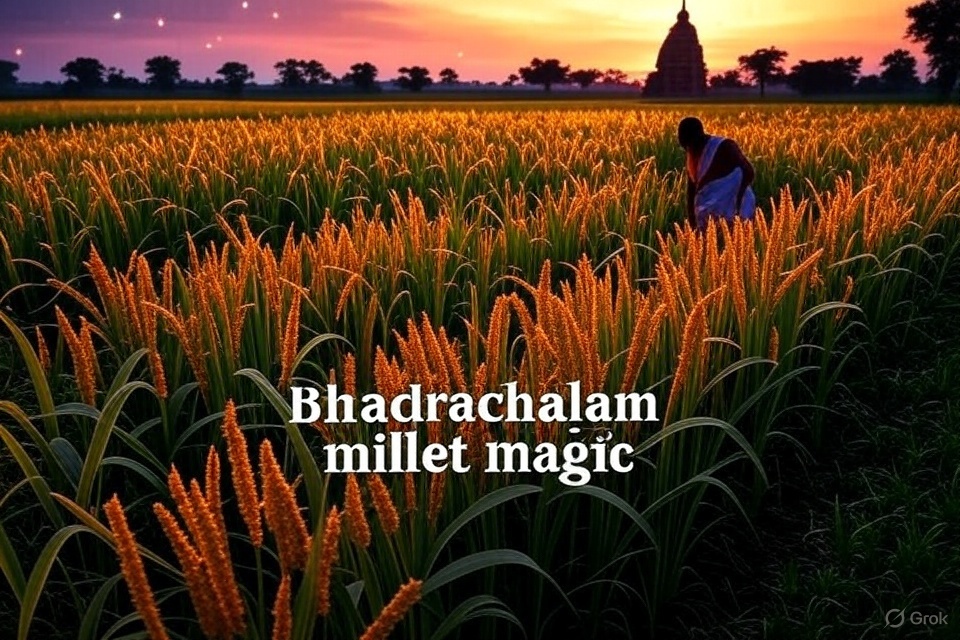
What is the Bhadradri Millet Magic which found mention in PM Man ki Baat?
WHAT?
Bhadradri Millet Magic refers to a brand of millet-based biscuits produced by the Srirama Joint Liability Group, a women’s Self-Help Group in Bhadrachalam, Telangana. These women, once agricultural laborers, have transitioned to producing healthy snacks made from millets like ragi and jowar, using natural ingredients such as butter, ghee, and jaggery, without artificial preservatives.
The biscuits are sold locally in Kothagudem and Bhadrachalam, with plans to expand to Khammam, and have gained international reach, with shipments to London due to demand from visitors to the Bhadradri Temple.
The group produces about five kilograms of biscuits daily and is planning to scale up with a larger oven to bake 600 biscuits per batch. The initiative, supported by the Bhadrachalam Integrated Tribal Development Agency (ITDA), reflects women-led development, as highlighted by Prime Minister Narendra Modi in his June 2025 Mann Ki Baat address. The group also produces Giri Sanitary Pads, distributing 40,000 pads to schools and offices at low cost within three months.
ABOUT SHGs and the Bhadrachalam Self-Help Groups (SHGs)
Self-Help Groups (SHGs) are small, voluntary associations of 10–20 people, typically from similar socio-economic backgrounds, who come together to address common economic, social, or developmental needs. In India, SHGs are primarily women-centric and play a crucial role in promoting financial inclusion, empowerment, and entrepreneurship, especially in rural and marginalized communities.
The Bhadrachalam Self-Help Groups (SHGs), particularly the Srirama Joint Liability Group, consist of women from tribal and marginalized communities in Bhadrachalam, Telangana, who have transitioned from agricultural labor to entrepreneurial ventures. Supported by the Bhadrachalam Integrated Tribal Development Agency (ITDA), these groups focus on producing millet-based products like Bhadradri Millet Magic biscuits, made from ragi and jowar with natural ingredients such as jaggery and ghee.
The biscuits are sold locally in Kothagudem and Bhadrachalam, with plans to expand to Khammam and even international markets like London, driven by demand from Bhadradri Temple visitors. The group produces around five kilograms of biscuits daily and aims to scale up with a larger oven for 600 biscuits per batch. Additionally, they manufacture Giri Sanitary Pads, distributing 40,000 pads to schools and offices at low cost within three months.
About author

Zinkpot — We Inform, You Perform.
Ask Anything, Know Better
अपना प्रश्न पूछें
-
All About the National Fisheries Digital Platform (NFDP)
November 04 What is NFDP? The National Fisheries Digital Platform (NFDP) is a big online system made by the Indian government to help people in the fishing and fish farming business. It started on September 11, 2024, and it's like a one-stop shop for fishermen, sellers, and companies to get help from the government. NFDP is a website and app where people in the fisheries world can sign up and create a digital ID. This ID is based on their work, like if they catch fish, grow fish, or sell them. The platform makes a big list (database) of all...
-
What is the National Marine Fisheries Census 2025?
November 04 Introduction The National Marine Fisheries Census 2025 is a big survey happening in India right now. It is all about counting and learning more about people who work in marine fishing – that means fishing in the sea. This is the fifth time India is doing this census, and it's special because it's the first one that's completely digital, using apps on phones instead of paper. What is the Census and Why Do It? India has a long coastline, and millions of people depend on the sea for their work and food. The...
-
The Role and Functions of the Food and Agriculture Organization (FAO)
October 28 Background The Food and Agriculture Organization (FAO) is a key part of the United Nations that works to end hunger around the world.FAO was started on October 16, 1945, in Quebec City, Canada, right after World War II. The idea came from earlier efforts in the 19th and 20th centuries to help with farming worldwide.In 1905, the International Institute of Agriculture (IIA) was created in Italy to collect farming data. But the war stopped that, so in 1943, US President Franklin D. Roosevelt held a meeting in Hot Springs, Virginia, with 44...
-
India's Spices Industry: How Big Is It in the World?
October 20 Background India is known as the "Land of Spices" for good reason. It grows, uses, and sells more spices than any other country. Spices like chili, turmeric, and cumin add flavor to food worldwide, and India's industry is huge. Spices have been part of India's story for over 5,000 years. Ancient texts like the Vedas mention spices like turmeric and black pepper. India was the center of the global spice trade, attracting explorers like Vasco da Gama in 1498, who came for black pepper from Kerala. European powers set up...
-
India trying to sell rice to it's largest importer
August 31 Key Highlights In 2024, the Philippines imported agricultural products worth about USD 20 billion, with staples like semi-milled rice, wheat, oilcake, food preparations, and palm oil among the top imports. India contributed approximately USD 413 million in agri-product exports to the Philippines, making up just 2% of the country's total agricultural imports. Major exports included bovine meat, groundnut, rice, and tobacco. It shows huge untapped opportunity in rice exports. The Philippines imported USD...
-
All about Namo Drone Didi Scheme
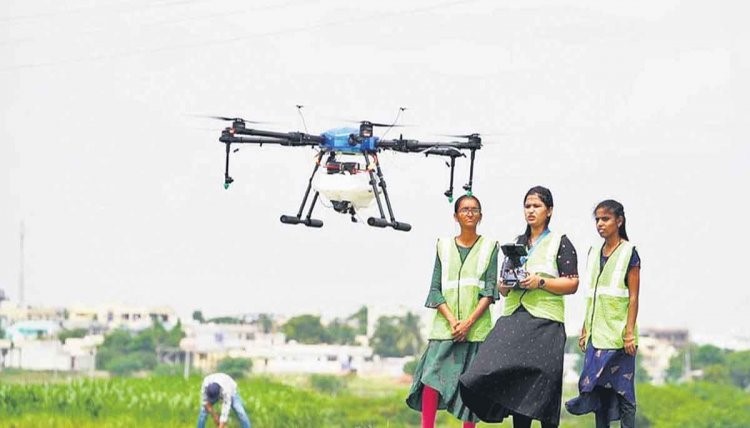
August 29 WHAT? The Namo Drone Didi scheme is a Central Sector initiative launched by the Government of India in November 2023 to empower rural women through drone technology in agriculture. It aims to provide drones to 15,000 selected women-led Self-Help Groups (SHGs) under the Deendayal Antyodaya Yojana-National Rural Livelihoods Mission (DAY-NRLM), enabling them to offer drone services like spraying fertilizers and pesticides to farmers on a rental basis. The scheme includes training women (aged 18-50) as...
-
PM Dhan Dhanya Krishi Yojana : How will it benefit farmers?
August 26 WHAT? The PM Dhan-Dhaanya Krishi Yojana (PMDDKY) is a newly approved six-year agricultural program (starting FY 2025-26) that converges 36 existing central schemes across 11 departments, along with state schemes, to enhance productivity and sustainability in 100 low-performing districts across India. The PM Dhan-Dhanya Krishi Yojana to strengthen small and marginal farmers. Its focus is on storage, irrigation, affordable loans, and sustainable farming. The government claims that this will increase farmers' income and...
-
What is National Agriculture Code (NAC)
June 18 WHAT? The National Agriculture Code (NAC) is a comprehensive framework being developed by the Bureau of Indian Standards (BIS), India’s national standards body under the Ministry of Consumer Affairs, Food and Public Distribution, established under the BIS Act, 2016. Modeled after the National Building Code (NBC) of 2016 and the National Electrical Code (NEC) of 2023, the NAC aims to establish standardized guidelines for agricultural practices across the entire agricultural cycle. Announced in...
-
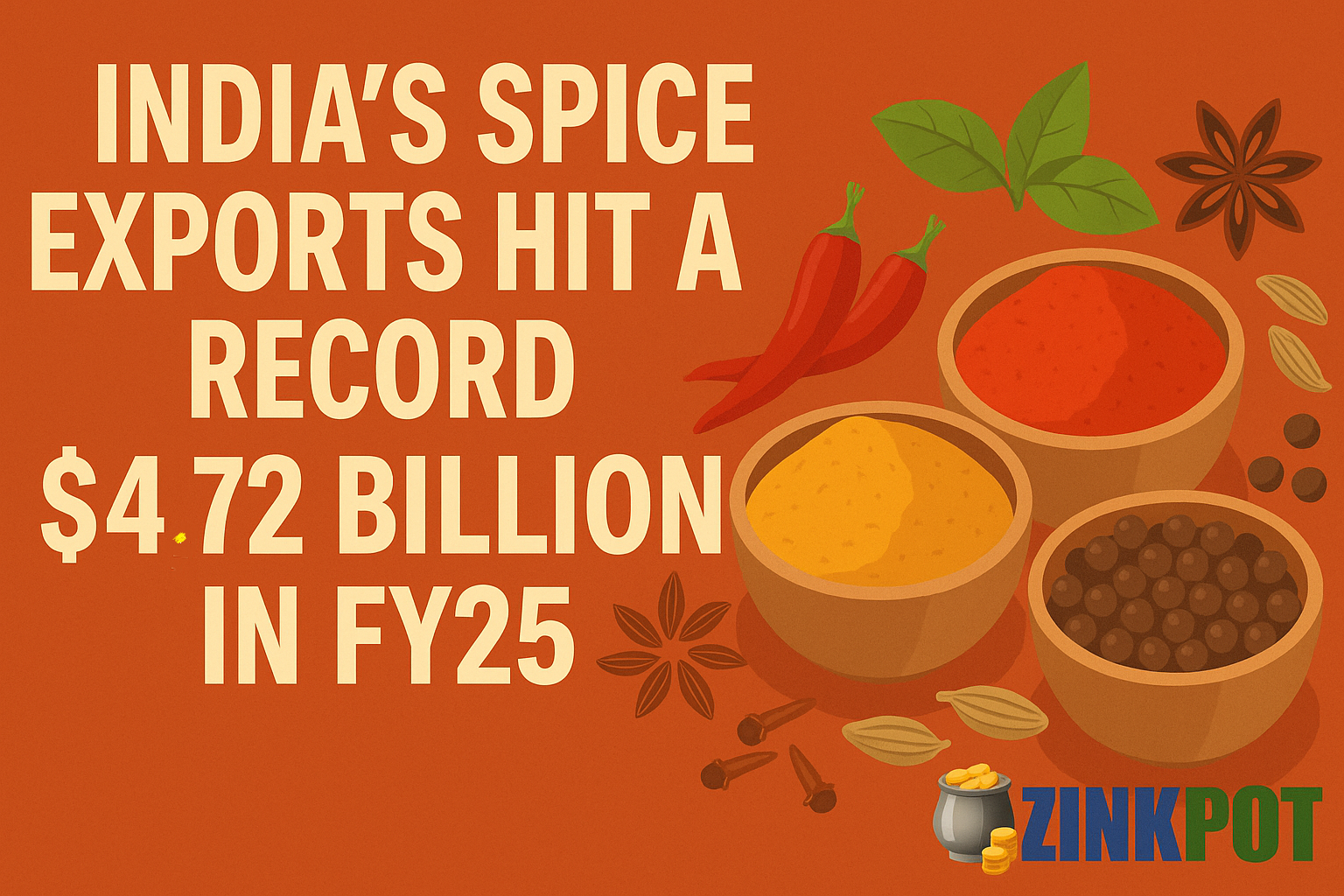
India’s spice exports hit a new high of $4.72 billion in 2024-25 on strong demand
June 10 DATA ON SPICES EXPORTS Value and Growth: India's spice exports reached $4.72 billion in FY 2024-25, a 6% increase from $4.46 billion in FY 2023-24, marking a record high. In the first half (April-September 2024), exports were valued at ₹17,488 crore ($2.09 billion), up 8.8% from ₹16,065 crore ($1.95 billion) the previous year. Export Goal: The target for FY 2024-25 is $4.7 billion, with an ambitious goal of $10 billion by 2030 and reach $25 billion by 2047, leveraging its position as the largest producer and...
-
'Only 20.7% annadatas fully depend on agriculture for income': Report calls for rethinking rural development strategies
June 02 SUMMARY A recent report by the People Research on India’s Consumer Economy (PRICE), titled “Reimagining Annadata Households and Their Livelihoods Beyond the Farm”, reveals that while 42.4% of rural Indian households earn some income from agriculture, only 20.7% are fully dependent on it. Key Findings Diversified Income Sources: Many agricultural households supplement their income through non-farming activities. On average, 33% of their income comes from sources like...
Comments
Write Comment