Inflation, Monetary Policy and RBI
What is a Variable Reverse Repo Rate (VRRR)?
WHAT?
The reverse repo rate is the interest rate at which the RBI borrows short-term funds from commercial banks, effectively absorbing excess liquidity usually at a fixed rate as determined by the RBI.
A Variable Reverse Repo Rate (VRRR) is a monetary policy tool used by the Reserve Bank of India (RBI) to manage liquidity in the banking system in which the "variable" aspect refers to a mechanism where the rate is determined through auctions, allowing flexibility in the interest rate based on market conditions and bank bids, rather than being fixed at the RBI’s standard reverse repo rate.
VRRR is used when there’s excess liquidity, often due to factors like government spending, foreign capital inflows, or RBI’s open market operations. For example, in 2021-2022, VRRR auctions were frequently conducted to mop up liquidity injected during the COVID-19 pandemic.
For example, If banks hold ₹3 lakh crore in excess liquidity due to heavy government spending, the RBI may conduct a 14-day VRRR auction to absorb ₹1 lakh crore. If the cut-off rate is 3.45%, banks earn this rate, and the RBI reduces liquidity, stabilizing market interest rates.
Key Features
- VRRR auctions help the RBI withdraw surplus liquidity from the banking system to control inflation, stabilize money market rates, and prevent excessive lending that could fuel price rises. By offering higher or variable rates, the RBI incentivizes banks to park funds with it.
- The RBI conducts VRRR auctions (typically for 7-28 days) where banks bid to lend money to the RBI at varying interest rates. The rates are generally around or above the fixed reverse repo rate (currently 3.35% as of June 2025, unchanged since 2020, though tied to the repo rate of 6.5% via a corridor).
- The RBI sets a target amount for liquidity absorption and accepts bids starting from the highest rate until the target is met.
- Difference from Fixed Reverse Repo: Unlike the fixed reverse repo rate, which is a standing facility available daily, VRRR allows dynamic rate adjustments based on liquidity conditions, ensuring market-driven outcomes.
How It Works?
Example: If the RBI announces a VRRR auction to absorb ₹2 lakh crore, banks submit bids with amounts and interest rates (e.g., Bank A offers ₹10,000 crore at 3.5%, Bank B at 3.45%). The RBI accepts bids starting from the highest rate until the target is met, setting a cut-off rate (e.g., 3.45%).
Banks earn the bid rate, and the RBI reduces liquidity, stabilizing short-term interest rates like the call money rate, which influences lending and borrowing costs.
Economic Impact
- Inflation Control: By absorbing excess funds, VRRR prevents banks from lending excessively, which could drive up prices.
- Bank Behavior: Higher VRRR rates encourage banks to park funds with the RBI rather than lend, tightening credit availability.
- Market Rates: VRRR helps align short-term interbank rates with the RBI’s policy corridor (between the Marginal Standing Facility rate of 6.75% and reverse repo rate).
About author

Zinkpot — We Inform, You Perform.
Ask Anything, Know Better
अपना प्रश्न पूछें
-
Is the Dollar’s Dominance Coming to an End?
November 19 What does the Dollar Dominance Mean? For nearly eight decades, the U.S. dollar (USD) has been the world’s reserve currency and has been used for Global trade and oil payments (the “petrodollar” system) Central bank reserves International loans and debt Safe-haven investment in crises The dollar has been the backbone of the global financial system. About 58–60% of all global foreign exchange reserves are still held in dollars (IMF, 2025). How did the Dollar become...
-
How Fed’s Rate Cuts Impact the World Economy
October 31 Introduction The US Federal Reserve, often called the Fed, is USA's main bank. It helps control the economy by setting rules for money and banking. One big tool it uses is changing interest rates. The key rate is called the federal funds rate. This is the rate banks charge each other for short-term loans. When people talk about the Fed cutting rates, they usually mean lowering this federal funds rate. Why Does the Fed Cut Interest Rates? The Fed cuts rates when the economy needs a boost. For example, if...
-
Nepal, Bhutan and Srilanka to get loans in INR? Rupee going international?
October 03 What RBI Is Allowing? As of October 2025, RBI has decided that Authorised Dealer (AD) banks in India and their overseas branches can extend rupee-denominated loans to residents and institutions in Bhutan, Nepal, and Sri Lanka for trade-related transactions. Reserve Bank of India (RBI) has moved to allow loans in Indian rupees (INR) to neighbouring countries under certain conditions. This is part of a broader push to internationalize the rupee and deepen rupee-based trade and finance. The measure aims to facilitate...
-
RBI’s Bold Banking Reforms: Easier Loans, Stronger Banks, Global Rupee Push
October 03 What? In a landmark announcement that signals a new era for India's financial sector, the Reserve Bank of India (RBI) has unveiled a comprehensive package of banking reforms designed to simplify lending, fortify institutional resilience, and accelerate the internationalization of the Indian rupee. Described by experts as a "bold and forward-looking" overhaul, these measures come on the heels of the Monetary Policy Committee's (MPC) decision to maintain the repo rate at 6.50%, while shifting to a...
-
What are unclaimed deposits with Banks?
September 24 What Are Unclaimed Bank Deposits? Unclaimed deposits are balances lying in savings accounts, fixed deposits, recurring deposits, or other bank accounts that have had no customer activity for 10 years or more. After this period, banks are required to transfer these amounts to the Depositor Education and Awareness Fund (DEAF), maintained by the Reserve Bank of India (RBI). Importantly, these deposits are not forfeited. Depositors or their legal heirs can still claim the money at any time through the bank, which then seeks...
-
Difference between inflation, deflation, disinflation, stagflation, skewflation, greedflation, shrinkflation
September 12 What is Inflation? Inflation is a sustained increase in the general price level of goods and services in an economy over time, which erodes the purchasing power of money, meaning that each unit of currency buys fewer goods and services than before. It is not a one-time price hike but a persistent trend, often expressed as an annual percentage rate. Inflation is when a commodity you buy now comes for higher prices than the previous price for the same quantity and quality. While moderate inflation (around 2-3%) is considered...
-
Why is FSDC a guardian of India's financial health?
September 08 WHAT? The 2008 Global Financial Crisis exposed how fragmented regulation in banking, insurance, and capital markets can destabilize entire economies. Learning from this, the Government of India established the Financial Stability and Development Council (FSDC) in December 2010 to strengthen financial resilience and protect the economy from systemic shocks. The FSDC is a high-level, non-statutory body that brings all key financial regulators under one platform. In today’s era of global uncertainty—marked by...
-
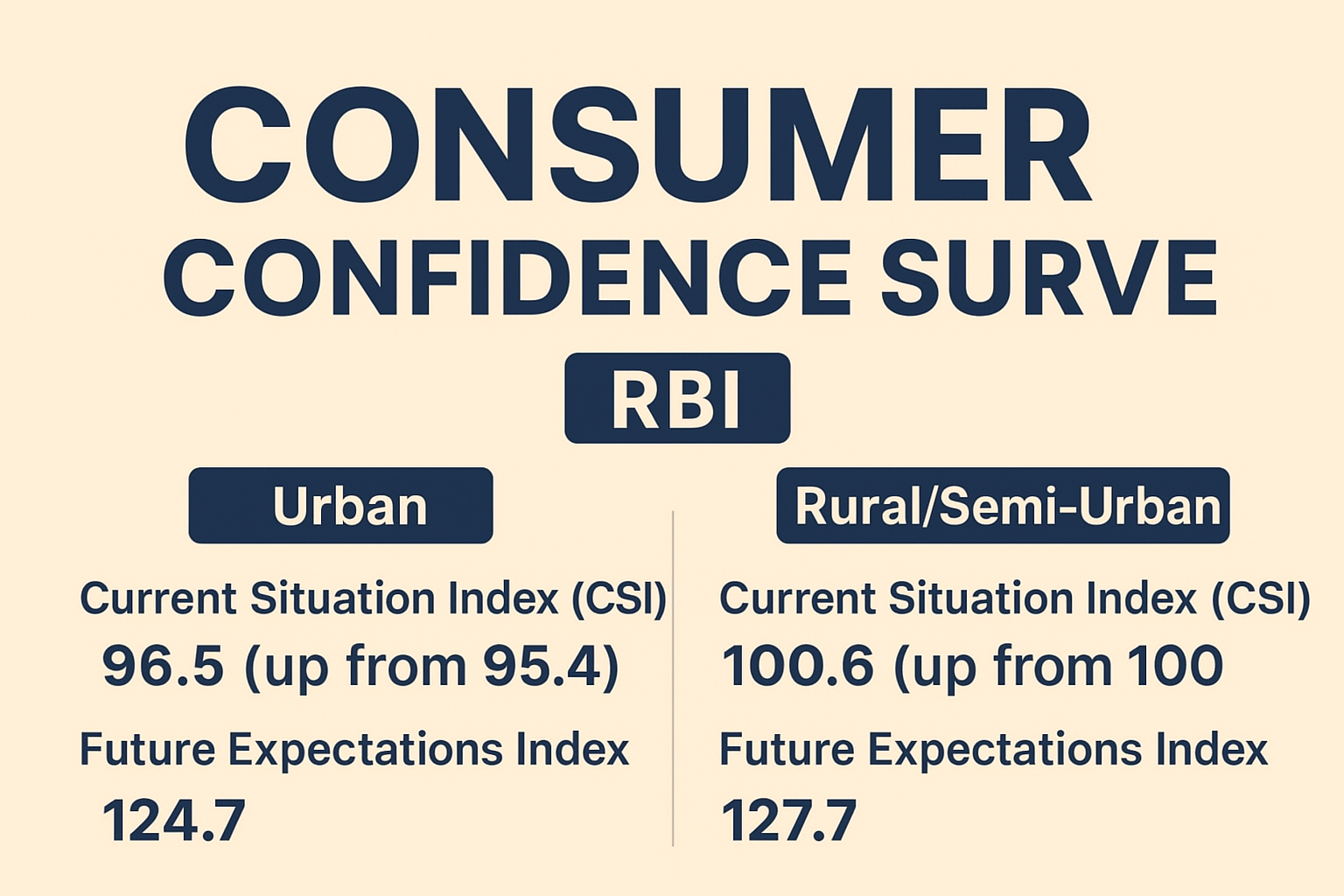
About RBI's Consumer Confidence Survey
August 29 WHAT? Consumer confidence is an economic indicator that gauges how optimistic or pessimistic consumers feel about the economy and their personal financial situation. RBI's Consumer Confidence Survey (CCS) is conducted bi-monthly. RBI’s CCS assesses perceptions and outlook on key economic parameters such as the general economic situation, employment, income, prices, and spending behavior. It produces two key indices: Current Situation Index (CSI) – Measures consumer sentiment about the...
-
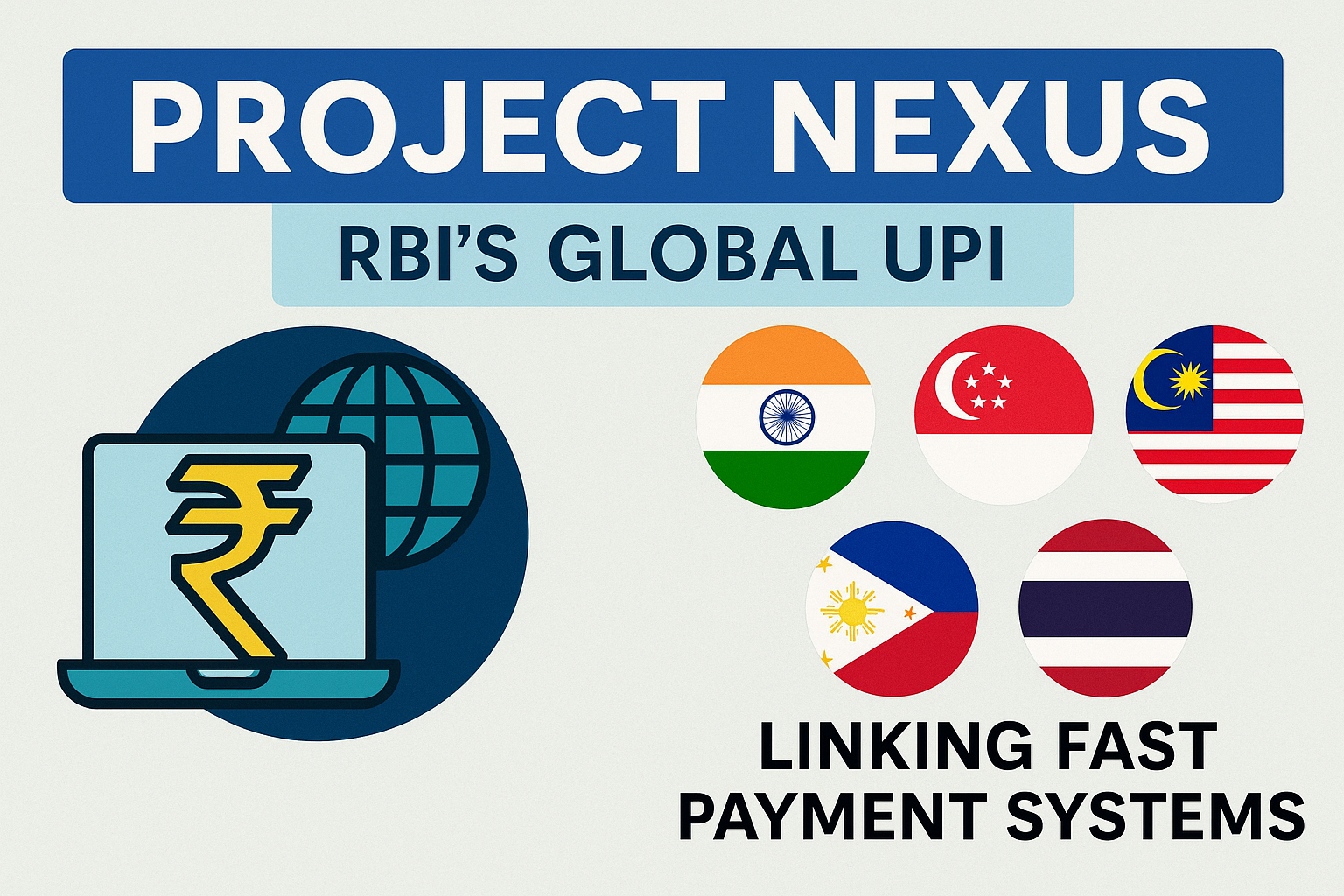
What is Project Nexus of RBI?
August 28 WHAT? Project Nexus is a multilateral initiative led by the Bank for International Settlements (BIS) Innovation Hub to create a standardized platform for connecting domestic instant payment systems (IPS) across countries, enabling seamless, instant cross-border retail payments. Launched in 2021, it addresses challenges in traditional cross-border payments, such as high costs, delays, and lack of transparency, by allowing IPS operators to make a single connection to the Nexus platform to access multiple...
-
What is the Cheque Truncation System (CTS)?
August 22 WHAT? The Cheque Truncation System (CTS) is a process introduced by the Reserve Bank of India (RBI) to streamline and expedite cheque clearing by replacing the physical movement of cheques with digital images and electronic data. It enhances efficiency, reduces costs, and minimizes risks associated with traditional cheque processing. CTS is an electronic cheque-clearing system where the physical cheque is "truncated" (stopped) at the presenting bank, and its digital image, along with relevant data (e.g.,...
Comments
Write Comment